Preparing For Long Distance Motorcycle Touring

Choose The Right Bike

It may seem obvious but choosing the right bike for you is important for comfortable motorcycle trips. You want one that will go the distance and carry (or tow) the gear you want to take along. You also want one that will take you where you want to go. If you want to go off-road, a dual sport or adventure bike is the way to go. In preparation for the longer trip, make shorter day long or weekend long trips to see if the bike you ride is going to be appropriate for taking that week or multi-week trip. Those little things that bother you on a day long ride will become intolerable in a few days and after a week or two, will have you parking the bike and taking an airplane or bus home.

Be Comfortable With The Bike

You should be comfortable working on the bike. Not tearing the engine down of course, but little things like standard maintenance stuff. Adding fluid such as oil, radiator, and brake/clutch fluid. You should be able to clean, apply lube, and adjust the chain if you have one. You need to know where fuses are and how to get to it. You need to know how to change all the bulbs on the bike. Especially the headlight bulb. The first time I changed the low beam bulb on my Hayabusa, I had to tear down the entire front end. I’d never changed it before and couldn’t figure out the release mechanism. Once I’d seen it and played with it, I understood how to change it and it now takes me just a few minutes and I only have to remove the right side dashboard.

Preparing Your Bike

After taking a few day or weekend rides on your bike, you’ll figure out what’s missing. A better seat with a backrest for instance. The Harley Softail Standard I once owned had an atrocious seat. I couldn’t ride for more than 45 minutes without feeling very uncomfortable. I replaced the seat with a Corbin two up seat and a pair of backrests which made all the difference. My first long distance ride on it was from Virginia to Idaho, up to Canada and back to Virginia through Buffalo NY.

Check all the fluids on your bike before departing on a trip. The brake fluid should be clear and not yellow. The clutch fluid (if you have it), may actually be gray instead of clear due to chain grease getting into the fluid from the lower piston. Open both reservoirs to make sure the rubber cap hasn’t popped and your fluid is lower than you thought. Clean, lube, and adjust your chain if you have one. Check the air in your tires. Do you know what the correct pressure is for your bike? And remember, the maximum pressure indicated on the tire isn’t necessarily the recommended pressure. You should have a sticker on the side of your swingarm that tells you the maximum tire pressure for one up and two up riding.

For additional capability, I’ve added a few farkles to my bike. First off, a Blue Sea fuse box under the seat so I can properly manage the other farkles. It’s set up so I don’t have a bunch of wires hanging off the battery. I just have the two wires going to the fuse box and then I can add more stuff without disconnecting the battery plus add fuses to protect the electronics on the bike, especially for items that may not have their own in-line fuse.

I added a waterproof accessories plug so I can plug in various car adapters to charge up my iPhone or iPad. I’ve also added heated grips and the plugs for my Gerbing heated gear (gloves and jacket). I added a small multi-item display primarily for the temperature gauge and a voltmeter to keep an eye on the draw my other farkles are pulling from the system.

You might also consider adding or replacing your windscreen. I pretty much ignored replacing my windscreen for the longest time because you never know if the new screen will be appropriate or even make it worse. Adding a double bubble screen to my wife’s 650 Ninja made the ride better for her but it put my head right in the turbulence causing it to be bounced around making riding her bike for any length of time pretty uncomfortable. I did finally replace mine with a Double Bubble and it didn’t make it worse and I can see more of my dash board.

Another thing would be some sort of cruise control. If your grips have a small gap between the bar ends and the throttle, you might be able to use a thick 7/8″ O ring. Slip it over the bar end and roll it into the gap for a friction stop of the throttle. Just roll it out when you need to return to normal throttle control. Be careful though as I had one slip between the throttle and bar. It’s friction so I had to twist in both directions until I could stop and remove the O ring. You can also get a couple of thumb locks. You can go with a Crampbuster but be careful on the higher performance bikes. I tried using my wife’s and the really fine throttle adjustment on the Hayabusa made it difficult to use. I likely would have gotten used to it after a while. The Vista Cruise throttle lock is a nice one although it does shorten the grip you have on your throttle. I prefer the Throttlemeister’s. I picked up a pair and replaced my bar ends with these. They work real well even if they’re a tad pricy.

How Much Gear To Bring

There are different schools of thought on this subject. On one side, you have the minimalist who thinks a couple of credit cards is all you need to take a trip. On the other side you have the riders who don’t want to stop to hunt down a fresh pair of socks or toothpaste or even a replacement light bulb. I’ve honed my list down pretty well however if you’re new to this, you might try getting all your gear together and then trying to cut it in half. Take fewer clothes. Do you really need 14 pair of socks?

Think about the trip you’re making and what sort of trip it’ll be. For some folks, they want to see the sights. Stop in at old towns and experience the ambiance of small town living. Eat at mom and pop diners. For others, they want to just ride and see the sights from the seat of a motorcycle. You have to think about this as you make your shorter rides.

You also want to be aware of the weather where you’re going and either pack appropriately or be prepared to exchange gear. When I rode from Colorado to Labrador, it was quite hot and humid in Kentucky. I was literally dripping with sweat in my tent. But as I headed north, the weather got colder. Fortunately I was visiting family and friends on the trip. I called my wife and had her FedEx my cold weather gear to my last friend stop in Connecticut. This was good because as I traveled through Newfoundland, it was chilly and foggy and after getting off the ferry in Quebec, it was downright cold. It would have been mighty uncomfortable without my heated gear. On the way back, I ran into the tail end of a hurricane and rode the bike briefly through torrential rains in Maine. Having my rain gear was important, again for comfort. And put it on early, before you get into the rain. It’s no fun to put on rain gear while wet. It’s generally rubber or coated plastic which sticks to everything when wet and hold moisture in as well as keeping it out.

Gear Recommendations

In general, you’re going to have to be comfortable with the gear you want to take along. Here is a short list of the gear I like to take along.

Containers – This is what holds your gear when on your ride.

  • Tank Bag – I like having a tank bag. I put a sweatshirt in the bottom compartment, a map in the top and all my important little things such as my cell phone, iPad, and camera. I also put my pens and paper here along with a note pad. When you stop for gas or food, take a few notes on the last couple of hours. A tank bag is also perfect for leaning on when riding. You can rest your body on it and your elbows on your knees and be good to go.
  • Saddle Bags – I have a pair of four point saddle bags. The front and back of both have a snap that holds it to the bike so it doesn’t flap around. I also pack my heavier gear in here to help with maintaining a lower center of gravity. If you have heavy gear up high, it makes the bike top heavy and difficult to control. I’ll also have my chain wax and plexus sitting right at the top of the right had bag as it’s higher when parked.
  • Tail Bag – A tail bag sits higher on the back of the bike so lighter gear should go here. I generally pack my clothes, toiletries, and other non-riding gear here. Use a plastic trash bag and pack your clothes in it. Not only does it keep the clothes dry, it keeps them from getting dusty and dirty.
  • Locking Trunk – It’s nice to have a lockable trunk to hold gear. If you keep it empty, you have space for souvenirs, you have space to put your tank bag so you can go on a short hike without worrying that your iPhone will disappear.
  • Smaller Bags – I use a modular system for packing. I have three small soft CD bags to hold various things; 1 for cables and connectors, 1 for toiletries, and 1 for small miscellaneous bits that might get lost in the mix such as chapstick or eyewash.
  • Mini-Backpack – My Joe Rocket Alter Ego jacket came with a little backpack meant to hold the liner and zip out shell but it also works great for holding a CamelBak for hydration. Sure you can grab a drink of water when at a rest stop but there’s nothing like a shot of cold water to help keep you alert.

Toolkit – This doesn’t have to be a super extensive kit. There are several mini kits available in their own carrying case. I have an old CruzTools kit which looks to have been upgraded. My kit looks similar to the EconoKIT M1 although I don’t see the wire mine has. In addition to this kit, I add in my rear axle wrench and extension from the bike’s kit and leave the bike’s kit home.

Quick Stand – To get my rear tire off the ground, I also have a Quick Stand. This lets me quickly and easily clean and lube the chain. It does require swingarm spools installed on the bike but I find them important for maintenance tasks in the garage anyway.

First Aid Kit – You can pick up a nice little kit at any Wal*Mart or hit up the Aerostich site for an assortment of motorcycle specific first aid kits. I picked up the Aerostich Touring Kit but honestly, in the 7 years I’ve been carrying it about with me, I’ve only opened it once for a band-aid. It’s nice to know I have it in case of emergencies though.

Tire Patching Kit – Get a tire patching kit for your bike. I picked up one from the Aerostich catalog along with an air pump that plugs into my accessories socket. I prefer the strings over the plugs in part because of a flat I got in Alaska that was the size of my little finger. A plug kit wouldn’t have helped but having a string kit along with some extra strings (I bought two packs of extra large strings just in case) will fill pretty much any hole. With strings, even if you have a big puncture, you can continue to add strings until the hole is sealed; or sealed enough to get you back to civilization.

Camping Gear – This consists of gear such as your tent, tent poles, tent pegs, sleeping bag, sleeping pad, camp pillow, tent stool, camp stove. I don’t take a stool any more but I did on the three week trip to Labrador (visiting friends, Sport-Touring.Net national meet, and the actual trip). It seemed unnecessary so it’s been sitting home since then. As to the tent, you really don’t need a gigantic one, especially if you’re riding by yourself. I do find a pad of some sort a requirement. It’s almost impossible to find a totally flat campsite and sometimes I’m setting up camp in the dark. Recently we picked up a pair at REI. Mine was the extra wide, extra long version. I still need to test it in my tent just to make sure it fits. Otherwise I’ll use the one I’ve been using. I also picked up a camp pillow. This thing compressed down to almost nothing (sun glass case size) and as a pillow works excellently. As to the camp stove, I generally just grab something to eat before hitting the campsite for the night so never need a camp stove. I also have a bag of nuts for snacks when traveling. I can dip in and grab a handful or two and be pretty good. I generally lose 5 or 10 lbs when touring 🙂

Electronics – This is your choice of gear for keeping in touch, keeping amused and entertained, getting pictures, and not getting too lost. I bring my iPhone and check in daily when I can. I bring an iPad both for entertainment and as a backup device for the camera. I also bring a camera. Finally a GPS is a nice to have. It can be fun to get a little lost but you need to be able to get back to where you were before the rangers are out looking for you. Don’t forget your various cables; both the adapters to plug into the bike and the cables to plug into the wall outlets either in motels or in the camp bathrooms if you’re camping. And especially don’t forget the data cable between the camera and the iPad and the iPad adapter.

Maps – Bring a selection of maps for the trip you’re taking. Even if you’re taking a GPS. You don’t want to depend too heavily on a GPS and have it fail for one reason or another and not have backup maps available. I find that maps also give me a broader view at a glance of the surrounding area.

Toiletries – Bring what you want to use when traveling. I generally carry a few disposable razors, toothpaste, toothbrush, floss, q-tips, liquid soap, shampoo, and deodorant. If you’re hitting motels, you can snag their soap and shampoo on the way out the door.

Straps and Bungie Cords – I find straps and bungie cords are the best way. Bungie cords have give to them so things might fall off the bike. I’ll strap down the front half of my sleeping bag, tent pole, tent combination so they don’t get moved in the wind and bungie down the rear of these items so they have some freedom of movement. I also always use a bungie net over the tailbag. It’s great for tying a wet t-shirt or bandana to so it can dry on the road and serves as an anchor for things like the tent pole bag or tent bag which have drawstrings. I hate having things flap about so I tie them to the net. It keeps it from flapping and in case a bungie cord fails, it keeps the tent poles from disappearing in the distance.

Miscellaneous – There are always lots of little bits of this or that which are good to have but you don’t necessarily remember to snag it.

  • Ear plugs are important for preserving your hearing but also for keeping the trip comfortable.
  • Flashlights plus a headband flashlight (REI for instance although I have a Maglite headband which works fine).
  • Pocket knife. I bring my Leatherman with me and have a second in a bag stowed in the tail bag.
  • Writing implements; pens, pencils, highlighters, etc.
  • Reading material and reading glasses if you need them (take a couple for spares).
  • Passport. If you’re leaving the country (going to Canada), you’ll need your Passport in order to get back to the US.
  • Bandanas. These are great for quick wipes such as wiping the rain off your seat before you get back on. You can tie it to your bike so it’ll dry quickly.
  • Vitamins. And other little meds such as aspirin or Advil.
  • Batteries. If your gear takes batteries, grab a packet or two and drop it in your tank bag.

Tips And Techniques

When traveling out of country (Canada for instance), remember that you’re not in the US any more and international phone charges kick in which can be quite expensive. Either change your plan before leaving the US or simply turn off the phone when out of country. The iPhone and iPad have Airport modes. That way you can leave the phone on to take quick pictures without incurring phone charges.

Take a black sharpie and mark the current location on your rear axle nut (mark the nut down to the spacer). This gives you a good rule of thumb when tightening down your rear axle nut after adjusting the chain. This way you don’t have to bring a torque wrench with you on the trip.

Use your gear in the garage before leaving. Perform maintenance with your proposed tool kit. This way you can make sure you have all the tools needed to perform on the road work if necessary. Same with the spare tire kit. If you ever get a slow leak (like from a brad or small nail) or if your tire needs to be replaced, take advantage of the opportunity and use your kit to repair it. And don’t skip any steps in the process. Just because you have an air compressor in the garage doesn’t mean you should use it. I had a tire kit for my Harley which had a short bit of hose. You pull a spark plug, screw in the hose and fill your tire. I was riding my Hayabusa in Alaska when I got a flat. Unfortunately the kit for the Harley doesn’t work on the Hayabusa as the access holes are much smaller. Fortunately I was able to get a ride to town but it was an expensive lesson.

Bike balance is essential for a comfortable ride. When on the road, in a safe area (long stretch of no traffic), take a moment to let the bike balance itself. Shift your butt to the left or right and hold on to the bars without pushing on either one. You should be able to find the balance of the bike doing this. If you find it’s heavier on one side or the other, take a break at the next overpass or break area and shift some of the gear around. You’ll find you’re going to be a lot more comfortable if you’re not constantly pressing on the right handlebar in order to keep the bike going in a straight line.

Gear access is important. If you have to rummage around to get your chain lube or quickstand, you’ll be less likely to do the essential maintenance job when you’re stopped for a break. Put the gear you need at night towards the bottom of your packing and the gear you need on the road at the top.

Call your credit card/debit card companies before leaving to make sure they’re aware you’ll be away. It sucks to have your card blocked and have to find a spot to make a call to get it straightened out.

You know your bike’s limitations. Make sure your tires are able to take the miles. Sport-touring tires really do hold up well for traveling, I’ve put 14,000 miles on a rear Metezler Z6 tire. Chains can last 20,000 miles depending on how you treat them, otherwise they’ll last between 5,000 and 6,000 miles. My oil’s lasted through a 10,000 mile trip without a lick of trouble. Keep an eye on the level and keep topping it off. I find I burn about half a quart to a full quart on a trip.

I wear an Aerostich suit when riding. Under it I wear a pair of bicycle pants and a compression shirt. It’s very very comfortable and it makes a big difference on trips. Just make sure to bring a pair of pants and regular clothes for restaurants. I also have a pair of waterproof gloves as backup to my main riding gloves.

I don’t mind riding on the slab to get from one place to another. It can be boring and it can be a little crazy. When in an area with higher winds, pay attention to the bigger vehicles and especially the big rigs and buses. If they’re blocking, as you get into their shadow you’ll lose that wind push and move towards the truck. Same when you pass it. And the trucks have different profiles so the wind dynamic will be different when going by.

Check out the various helmet based radio or music options. I use an Autocomm but you also have the Chatterbox and others. I have smaller ear holes and more sensitive ears so wearing ear buds or in the ear headphones like the Etymotic is very painful after about 30 minutes.

Safety

While eating on the road is an enjoyable experience, be careful. Eating too much or eating the wrong foods can make you sleepy on the road. You’d think you couldn’t fall asleep when riding a motorcycle but it’s darned easy. Keep it light and take a break immediately upon feeling sleepy. Toughing it out is dangerous.

Riding With Someone Else

And don’t forget your passenger if you’re taking one along. He or she will, depending on the bike, have an even more uncomfortable ride.

Posted in Motorcycles, Ride Checklist, Uncategorized | Tagged , , | 3 Comments

Job Positions

In a discussion at work yesterday, one of my coworkers commented that he expected to see Unix Sysadmin somewhere in the titles of someone who submits their resume for review. With that comment, I had to check out my job history and see what my titles were in the past. These are all job changes at the location I was working at (for example, I was at NASA 13 years but worked for four different companies and my title changed 14 times). Here’s the list:

Senior System Administrator
Consultant
Consultant
Consultant
Network Engineer
Chief Server Engineer
Sustaining Engineer
Senior Unix Administrator
Senior Principal Technical Specialist
Senior Unix Administrator
Network Administrator
Support Engineer
Network Administrator
LAN Manager
LAN Manager
LAN Manager
Technical Support Engineer
Consultant
LAN Manager and Installer
Consultant
Programmer/LAN Installer
Programmer
Photo Editor
Programmer
Security Guard
New and Used Car Salesman
Typesetter
Illustrator
Graphics Artist
Graphics Artist
Graphics Artist
Military Policeman
Infantryman
Infantryman
Farm Picker

Pretty interesting history there. I pulled it off of my Linked In profile and added a couple of bits that can’t be added because I don’t recall the company name (for example, I was a Photo Editor for a month at one place).

Posted in About Carl | Tagged | Leave a comment

Guitar Time

It’s been a few weeks since I’ve updated the blog. I have a couple of updates I’ll be adding in over the next couple of evenings.

First off, I did stop lessons back in August. I wanted to take a couple of months off to work on the lessons I’d already received and to generally relax and absorb. I’ve also been poking about at different songs to find something I can learn right now with my limited skills.

A couple of weeks ago I hit upon Blue Oyster Cult’s Burning For You. I started with the intro and discovered it was the second guitar and not the lead (which is a bit more complicated). On the positive side, the licks are fairly straightforward. There are 6 different sections with another one that’s spliced into one of the 6. I learned each one pretty well but had trouble with the transitions between them. I finally got enough to try and record. It took several tries but I finally got a reasonably good run through.

I don’t have the YouTube link at my fingertips as I’m posting from my iPad but I’ll snag the link and update the post later.

It’s not as good as each of the sections that I can do. The transitions cause me to get a little fumble fingered, strings get muted or play when I’m moving between notes. I’ll get the technique down with more practice.

Posted in Music | Tagged , | Leave a comment

Removing the Rear Seat

Last year I did something silly and put the rear seat back on the back of the ‘busa but forgot to connect up the lock cable. So I haven’t been able to get in for almost a year. So far it hasn’t been too much of a hassle however recently I find that one of my tail lights is out (just the running light), I need to refresh my rear brake fluid, and in general, it’s just annoying.

So first off, how do I get into the trunk area. I’ve checked on line in a few places and there’s really no suggestions short of cutting it off. So that’s what I’m going to do.

Note: This is a reenactment after I was done. I put it all back together and went through it again but took pictures. It’s an accurate depiction of the steps I took though 🙂

First off, here’s the rear seat. It’s seen better days so I’m not too concerned if it breaks. I don’t have a replacement handy so breaking would be annoying but nothing I’m going to worry about right now.

I tried pulling up on the seat and I could see the plastic hooks. I couldn’t pull it hard enough to break them though. I snagged a hunk of wood from my scrap pile and propped it up while I retrieved my implement of destruction.

A saw. Yep. With the seat propped up, I used the saw and cut off the hook. Then I did the same thing with the other side.

Next I pulled up on it and decided I’d just remove the rear housing. Once it’s off, I’ll be able to reach the latch and remove the seat. I just have to remove a couple of screws and bolts.

I removed the screws and the Frankenbolts.

I can see the mechanism but can’t get a probe in and over to the left to the latch. So I need to remove the luggage rack bolts. Shouldn’t be too hard.

I was able to get three without too much trouble but the fourth one was really stubborn. Eventually I had Rita pull back on the seat so I had a clear shot at it and finally it came out.

Cowling is off and now you can see the back of the seat. See, there’s a large plastic bit there just to keep miscreants out of your trunk.

It’s a little half box cut across the corners. This side shows the protection is on the side too. Only one way to get in.

From the left side, I can see where the latch is. I pulled one of my hooked probes out of its package and was able to reach

And release the latch

To get the seat off.

Once done, I put fresh brake fluid in and replaced the failed bulb then put the cowling back on. Note that I didn’t forget to put the key cable back in place so I can get in next time.

I’ll have to check out Corbin and get a replacement seat. It’s due anyway.

Posted in Colorado, Cornell, Motorcycles | Tagged , | Leave a comment

Guitar Cables

Found a good post on understanding guitar cables:

Well, there are two factors to think about in terms of cable–tone and construction.

The primary reason for tonal differences between cables results from a cable’s capacitance.

Cable capacitance, together with pickup inductance and pot resistance in a guitar equiped with passive pickups, form an oscillating circuit with a resonant peak at a certain frequency. That frequency is usually in the 2khz to 5khz range–above the fundamental frequencies of the guitar but in the “presence” range of the guitar’s upper harmonics.

The more capacitance–either by virtue of using higher capacitance cable, longer runs of cable, or both–the lower the frequency of the resonant peak, the darker and more focused the system will tend to sound. The less capacitance–either by virtue of using lower capacitance cable and/or shorter runs–the higher the frequency of the resonant peak, the brighter and more open a system will tend to sound. This effect will be signficantly more pronouced with lower inductance pickups (single coils) and lower resistance pots (250kohm, for example). It can be a fairly subtle difference that can be perceived numerous ways. For example if a certain peak accentuates frequencies associated with pick attack, a cable that produces that peak in a system can be perceived as sounding “faster.” The effects are also, as you can tell, system dependent. It’s not that a given cable as a tonal quality of its own, it’s the nature of how the capacitance of the cable functions in a given guitar signal chain.

Some people prefer higher capacitance cables like the Canare at 49 pF/ft. Some prefer lower capacitance cables–I use Gepco XBand at 23 pF/ft. It’s all a matter of tuning your system to taste.

There’s no correlation between cost and capacitance. Nor is capacitance a measure of quality. There are plenty of durable cables made from high quality materials at a range of costs and capacitances.

In terms of noise you want a cable that is well shielded from radio frequency and electromagnetic noise–so a double shielded cable with a braided or spiral shield is ideal. Foil shields are not as good. In addition, a cable with a semiconductive PVC shield layer as well–like the Gepco and the Mogami–will shield against microphonic handling noise.

Finally, you need to make sure the plugs are high conductivity and the quality of the terminations and stress relief are good. If you buy your cables from Lava Cable they’ll terminate with great G&H plugs and they do a fabulous job terminating.

So cable capacitance of your choosing, quality copper, well shielded, well terminated– those are the things that make for good cable. “Best” would be impossible to choose. If you’re looking to experiment with cable I recommend trying a bunch of well made cables of varying capacitances–Gepco XBand, Mogami Platinum, Canare, Dimarzio, and the super low capacitance Elixir (10 pF/ft) are all good relatively inexpensive choices–to see what works to your taste in your system.

Posted in Music | Tagged , | Leave a comment

Guitar Lessons

Ok, it’s been a few weeks since last I blogged about this.

Zack’s been having me learning new techniques and focusing especially on 12 bar blues and embellishments and on breaking out of the rut of the single location on the fret (the b5 blues scales for instance). I’ve been learning all the other scales and modes that Zack passed on last time and picked up a few famous riffs from songs I really like.

Marty Robbins – El Paso – this is the one I’m concentrating on getting through. I have the chord changes but need to finish up on the leads.
Bob Seager – Mainstreet
The Beatles – Day Tripper

Add in:
Heart – Crazy on you
Tom Petty – Breakdown

The funny thing is that right now, they’re all coming along pretty easily. Certainly not the entire song (yet) but I can pull out the main bits that everyone associates with the songs. And these are just going “hey, I could probably play that with 30 minutes of practice” and sure enough I have the basic stuff down quickly and just need a little more practice to get it flowing smoothly. And I can play along with the song on my iPhone 🙂

So last week Zack had me going straight up and down the fretboard vs playing across the fret using one of the scales. Now he normally has me practice with the b5 Blues Scale but occasionally he’ll let me go outside that and into other scales (the b7 and b3 – that’s the ‘flat 3, flat 5, and flat 7’ scales). This time he had me shifting from each of the three scales but up and down. So the B string start with 5, 7, and 8 but keep going up or down to 3, 4 or 7, 8, and 9. These are the positions on the B string. Plus he had me start learning the whole notes on the fret as well but breaking it down by string. So E is open, 1, 3, 5, 7, 8, 10, and 12. So odd, odd, odd, odd, even, even, even. An easy pattern to learn really. And the B string is just as easy. The shift from odd to even is on the 5/6 positions on the fret. And of course since the low E is the same as the high E, you have three strings right away. In looking at the others (A, D, G), they’re easy as well from a pattern point of view. Open, 2, 3, 5, 7, 8, 10, 12 for A. It’s shifted down one additional odd for D; open, 2, 3, 5, 7, 9, 10, 12. And G is easy too. Open, 2, 4, 5, 7, 9, 10, 12. And 12 is the same as Open so you have the next set of whole notes too.

If you’re looking at it, you may not be seeing the patterns but they’re there. A and D are the same as B and E but shifted down 2 frets so shoot, you have 5 of the 6 strings by just memorizing two patterns. Then you just have the one odd one (which really isn’t odd, just shifted down two more frets than the B string). And G is a mirror pattern with an extra at the top. 1 skip 1 skip 1 1 skip 1 skip 1 1 skip 1.

Easy once you see the pattern.

Next is practicing until notes are habitual.

Posted in Music | Tagged , | 2 Comments

Interesting Facts

First

Failure to develop friendships or seek shared enjoyments with others, lack of social or emotional reciprocity, impaired nonverbal behaviors such as eye contact, facial expression, posture, and gesture.

Engages in one-sided, long-winded speech about a favorite topic while misunderstanding or not recognizing the listener’s feelings or reactions, such as a need for privacy or haste to leave. May appear as disregard for other people’s feelings or insensitive. Displays selective mutism, speaking not at all to most people and excessively to specific people.

Second

Behavior, interests, or activities that are restricted and repetitive and are sometimes abnormally intense or focused. Sticks to inflexible routines, moves in stereotyped and repetitive ways, or preoccupy themselves with parts of objects.

Pursuit of specific and narrow areas of interest.

Repetitive motor behavior such as complex whole-body movement.

Third

Speech abnormalities include verbosity, abrupt transitions, literal interpretations and miscomprehension of nuance, use of metaphor meaningful only to the speaker, auditory perception deficits, unusually pedantic, formal or idiosyncratic speech.

Poor prosody, tangential and circumstantial speech, and marked verbosity. Speech may be unusually fast, jerky, or loud. Speech may convey a sense of incoherence; including monologues about topics that bore the listener, fail to provide context for comments, or fails to suppress internal thoughts. Fails to monitor whether the listener is interested or engaged in the conversation. The conclusion or point may never be made and attempts to elaborate on the speech by the listener is often unsuccessful.

Has an unusually sophisticated vocabulary and tend to use language literally.

Fourth

Demonstrates enhanced perception of small changes in patterns such as arrangements of objects or well-known images.

Poor coordination, have an odd or bouncy gait or posture, poor handwriting, or problems with visual-motor integration. Problems with proprioception (sensation of body position) on measures of apraxia (motor planning disorder), balance, tandem gait, and finger-thumb apposition.

Conclusions

Must do more reading.

Posted in About Carl | 2 Comments

Sold a motorcycle, bought a guitar

We finally got the ad up on craigslist for my 2001 Suzuki SV650S, exactly the same time as someone was looking for just the bike. I posted the ad early Friday for what I thought was a fair price. I did get two immediate answers but then it was flagged and deleted by the craigslist mods. I did post a query to the craigslist forums as to why it was deleted and had several answers; I didn’t post to Boulder, I posted to Denver which is a no-no, I posted that it had been raced which was a no-no, the price was too high, the pictures show racing. So I was going to post it for about $500 less based on the value in Kelly Blue Book. The funny thing is that Rita put the bike up around the same time without telling me (which might have also caused it to be pulled), asked for $300 more than I’d asked and of course $800 more than I was going to ask the second time and had someone come by at 5:30 to look at it, give it a try, and then buy it!

The guy had recently gotten back on a bike after 20 years. His son had purchased (with his own money) a 93 which made it home but was just giving them loads of problems. So dad bought this one for him. They’ll work on the other one and sell it to try and get some funds back.

I need her to make more ads for me. Mine just get spammers and low ballers.

Anyway, after getting the cash and waving to the guys riding the bike off I already knew what I wanted to get. I got on line and searched about for a Fender Stratocaster and the prices. Most were $300 to about $800 for MIM (Made in Mexico) models with a few others for more. With that I headed over to Todd’s Guitars Etc. over on Main Street. Rita says I support local merchants too much 🙂

Todd wasn’t in so I worked with his assistant. I told him that I did want to get a Stratocaster (Strat) and didn’t know what the different models were. I didn’t mind getting a used one if an appropriate one was available but didn’t want to get a special model or edition for the extra bucks as I didn’t want to spent a lot of money. I also wanted to get a Line-6 JM4 Looper. Zack uses one for our lessons and I really like its capabilities for teaching.

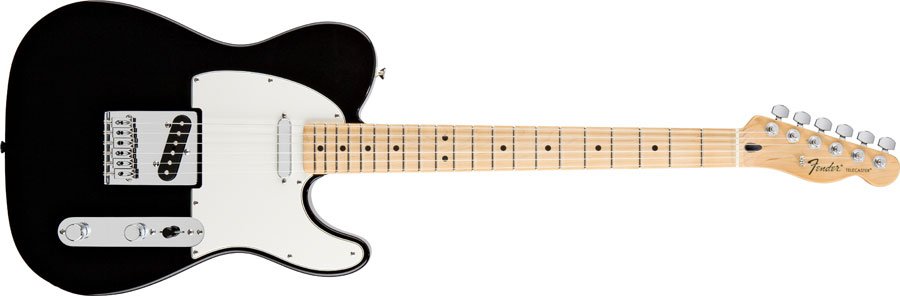
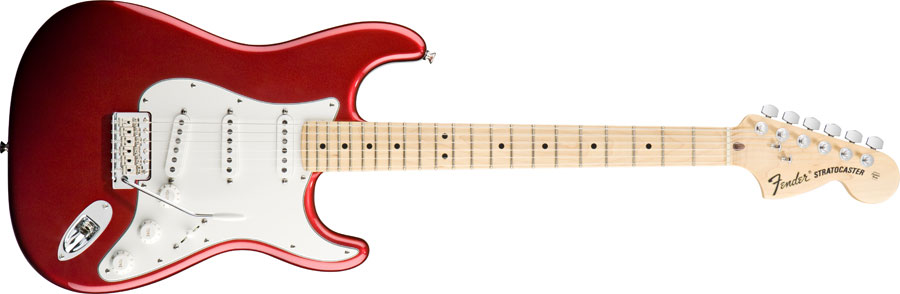
Anyway, he set up a Fender Standard Stratocaster (he said it was made in Mexico which is not bad as my telecaster is also made in Mexico), then a Fender American Special, finally a Fender American Standard HSS. The Telecaster (which I currently have) has two pickups (the electronics that translates the string strum to digital), one at the bridge and one at the neck. It has a switch that in the forward position activates the neck pickup. The rear position activates the bridge pickup and the center position activates both. The two pickups have different sounds. The neck provides a softer tone while the rear one provides a twangier one.

Fender Standard Telecaster (the one I currently own but in Placid Blue)

Fender Standard Stratocaster

Fender American Special

Fender American Standard HSS (H=Humbucker double pickup, S=Single pickup)

As you can see, the Strat has three pickups. A neck and a bridge like the Tele but there’s one in the center as well. The switch has 5 positions. Position 1 activates the neck pickup. Position 2 activates the neck and center pickups. Position 3 activates just the center pickup. Position 4 activates the center and bridge pickups. And Position 5 activates the bridge pickup. My Telecaster and the first two Stratocasters have a single coil pickup in all positions (check the pictures; you can see the single row of points under the strings at the neck and center or bridge on the Tele). The American Standard has a humbucker dual coil pickup in the bridge position.

So as he wandered around helping others, I played the three guitars. Honestly the Mexican and American Special both sounded pretty much the same and similarly to my Telecaster but the American Standard sounded a lot different, better in some ways than my Telecaster. The price was a little higher than I wanted to go especially since I was looking at a Line-6 FM4 Looper as well so I asked if there was some play in the price. He went to check and dropped $100 from the total.

While I was waiting, Zack became available (he was teaching on Saturday) so I chatted with him. We talked guitars and looked over the ones I was examining then when I mentioned I was interested in the Line-6 as well in part because he uses it in our sessions, he had me come in and went over some of the things we hadn’t touched on yet. I was already sold but it’s nice that Zack took some extra time to show me the machine.

Anyway, pics of my new guitar!

Fender American Standard Stratocaster with a Humbucker pickup:

Line-6 JM4 Looping Machine:

All the pictures

Pretty sweet I must say.

Posted in Colorado, Cornell | Tagged , , , | Leave a comment

Lessons

I let Zack (my teacher) know about the upcoming jam session and he shifted the lesson a bit to help me play better with a group. In this case, he showed me the 12 bar blues and a couple of different methods of playing them. I’m still not 100% clear but I’ll be checking out wiki and asking questions as I explore them this week along with the other lessons I’ve had over the past 4 months.

He mentioned also that he had one of his students cancel out of a lesson so he had some time to chat and went out front to hang out with Todd (the owner of Guitar’s Etc) and his assistant (who’s name escapes me at the moment; it’s important though, Jamie for purposes of the story). A couple of weeks ago I let Todd and “Jamie” know about my YouTube video posting and we even brought it up while I was there so he could watch and listen. Zack said that “Jamie” was impressed by my progress and that I was doing very well. That’s cool of course but Zack also said that “Jamie” is a very good player and doesn’t hand out unsolicited compliments often, so 🙂

Anyway, we went through mostly the 12 bar blues along with some accompaniment so I could get it set in my mind and headed on out for the evening.

Pretty cool, I think 🙂

Posted in Colorado, Cornell | Tagged , | Leave a comment

More practice

The previous session with Zack, he gave me a Mode sheet with scales. I’ve learned the Blues flat 3, flat 5 and flat 7 scales. The mode sheet has several extra scales to practice with.

Aeolian Mode
Dorian Mode
Ionian Mode
Locrian Mode
Lydian Mode
Mixolydian Mode
Phrygian Mode

There are two sets of modes that are only off by eliminating the first note so they’re easy to know once you know the first one.

In addition, he provided four common barre chords and an exercise to get me used to moving into position. The barre chord is simple when you understand. Essentially you’re emulating a capo with your index finger and playing a regular open chord with the remaining fingers. It’s a little tough because you’re learning how to play an E chord (for example) and having to shift the fingers one note to play an E major barre chord. The exercise from Zack is to play the A chord then shift to the E major barre chord. Then G and back, then D and back, and finally E minor and back. I’ve been practicing it and am getting the hang of it, although it’s slow to shift.

Finally he gave me two open scales.

I’ve gone through them and have most memorized. I need to use them to play along with my backing tracks or drum kit in order to set them in my memory so I’ll be doing that as well.

The funny thing is Zack may not realize how OCD I am about stuff 🙂 Last week he mentioned, after I showed him that I already knew a couple of the scales that I was in danger of being the fastest adult (see, “adult” again) student to learn all the scales. That gives me some motivation to learn them quickly.

One more thing that’s new. I joined the Telecaster forum just in time. The Denver folks are planning a jam session and inviting all levels of players. I asked if a newbie (December) is acceptable and they said sure, not only that it’d be good experience for me to play with other players. And not only that! Rita has agreed that we can have the session at our place. We have a nice big room (10×40) and suggested June the 5th as she’ll be out of town.

Hey Jeff (I know you’re out there), want to come by on the 5th to jam? 🙂

Posted in Colorado, Cornell | Tagged , | 2 Comments